Direct Answer
A dealership trade-in appraisal involves more than checking a vehicle’s mileage and exterior condition. The appraiser also needs information about its maintenance, ownership, repairs, and overall readiness for resale. Missing documents or unresolved paperwork can create unnecessary questions during the process.
For drivers researching car trade-in value in Washington, preparing an organized appraisal packet can make the evaluation easier. Gathering service records, ownership documents, keys, and repair receipts before visiting a dealership helps reduce uncertainty and gives the appraiser a clearer picture of the vehicle.
Assemble Your Vehicle’s Appraisal Packet
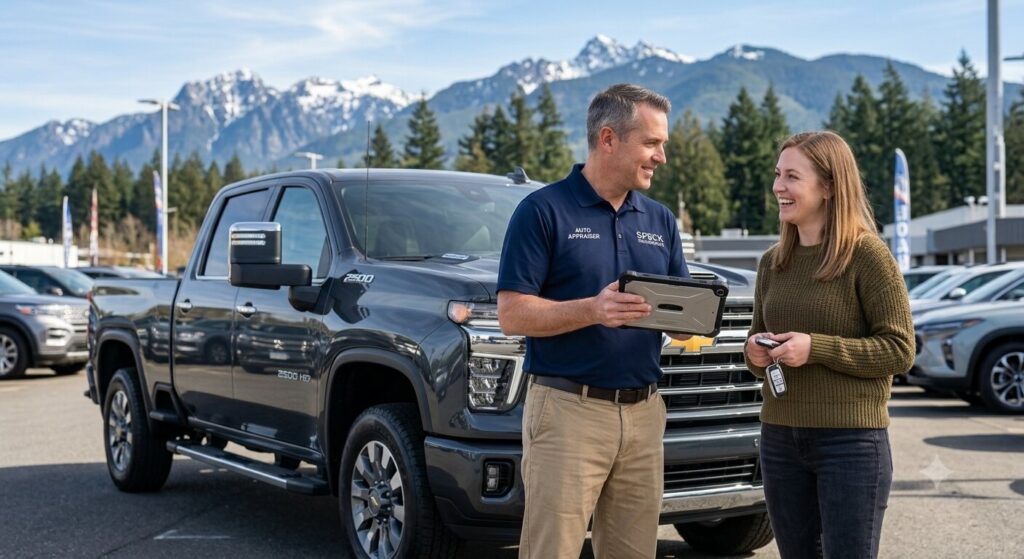
Think of your appraisal appointment as an opportunity to present a complete record of the vehicle. Rather than searching through emails, glove compartments, and filing cabinets while speaking with an appraiser, organize the relevant documents beforehand.
Your packet can include:
- Vehicle title or available lien information
- Current registration
- Maintenance records and service invoices
- Receipts for mechanical and body repairs
- Documentation from certified body shops
- Owner’s manuals and available accessory information
- All available key fobs
Arrange service documents chronologically. This makes it easier to show when maintenance was completed and what work has been performed.
Document repairs and previous damage
If the vehicle has been involved in an accident, gather available repair invoices and body-shop documentation. An accident history may affect the appraisal, but records showing professional repairs help the appraiser evaluate the vehicle more accurately.
The same principle applies to mechanical work. Receipts for brake replacements, fluid service, tires, and other repairs provide evidence beyond a verbal description of the vehicle’s history.
Make ownership information easy to verify
Check the names appearing on the title and any available lien information. If another owner must participate in the transfer, find out what documentation or signatures will be needed before the appointment.
When a loan remains outstanding, contact the lender or ask the dealership to obtain the current payoff amount. Having accurate information available helps prevent confusion about the vehicle’s equity.
Protect Your Personal Information Before the Handover
A vehicle’s infotainment system may contain information that should not pass to its next owner. Preparing for a trade-in should therefore include a digital privacy check.
Before transferring the vehicle, review and remove information such as:
- Paired phones and synchronized contacts
- Saved home and work addresses
- Navigation history
- Garage door codes
- Account credentials
- Connected-app access
Follow the manufacturer’s recommended process for resetting the infotainment system. Before performing a reset, preserve any information you still need and make sure you understand how to remove connected accounts or devices.
This step is separate from the vehicle’s mechanical appraisal, but it is an important part of preparing the car for ownership transfer.
Present a Vehicle That Is Ready to Inspect
An organized document folder is useful, but the vehicle itself should also be easy to examine. A clean car allows the appraiser to see its condition without personal belongings or dirt getting in the way.
Start by removing trash, charging cables, and other loose items. Vacuum the carpets, seats, and cargo area, including the spaces beneath the seats. Wash the exterior, clean the wheels and plastic trim, and remove streaks from the windows.
Next, check a few inexpensive items:
- Replace burnt-out bulbs.
- Correct low fluid levels.
- Inflate matching tires properly.
- Consider repairing a small windshield chip when the expense is reasonable.
- Confirm that available key fobs work.
Avoid spending heavily on major mechanical repairs simply to prepare for an appraisal. Dealerships may have internal service departments, parts resources, and technicians who can complete certain work more efficiently. Compare the repair expense with the likely improvement in the offer before authorizing major work.
Understand What the Appraiser Will Consider
Your paperwork and preparation help explain the vehicle, but the final appraisal still depends on its actual market position.
Important considerations include the vehicle’s mileage, trim, drivetrain, options, mechanical condition, appearance, service history, and local buyer demand.
Washington’s regional conditions can also influence how vehicles are evaluated. Cars in the Pacific Northwest may experience damp winters, road treatment in mountainous areas, and dusty conditions along eastern agricultural routes.
Demand varies across the state as well. Hybrids and all-wheel-drive crossovers may appeal to Seattle-area commuters, while four-wheel-drive pickups can attract interest in Tri-Cities, Yakima, and rural communities. Seasonal interest in all-wheel-drive vehicles may also change before winter.
These factors help explain why the same model may receive different offers depending on its condition and the local market.
Research the Vehicle Before the Appointment
You do not have to wait for the dealership to tell you what your vehicle might be worth. Establish a reasonable reference range using automotive valuation tools such as Kelley Blue Book or Edmunds.
Enter the exact VIN, trim, mileage, equipment, drivetrain, and condition. Select trade-in value rather than retail or private-party pricing, and be realistic when grading the vehicle.
It is also useful to request written appraisals from multiple buyers. Save the estimates and compare their assumptions. A calculator provides a starting point, while a written offer gives you more practical evidence of what a buyer may pay.
A well-supported car trade-in value in Washington comes from accurate vehicle information, documented condition, and realistic market comparisons.
Review the Financial Details Before Accepting an Offer
Washington’s eligible trade-in sales-tax treatment can affect the financial result of a replacement-vehicle purchase. The trade allowance generally reduces the taxable balance, making the dealership transaction potentially more valuable than the headline trade amount alone suggests.
Ask for a written worksheet showing the replacement vehicle’s price, trade allowance, taxable balance, taxes, and fees. The Washington Department of Revenue provides guidance on vehicle sales and trade-in tax treatment.
If you still owe money on your current vehicle, review the lender’s payoff as well.
- Positive equity: The trade allowance exceeds the outstanding payoff, leaving an amount that can be applied toward the next purchase.
- Negative equity: The payoff exceeds the allowance, so the difference must be addressed in the transaction.
Compare the complete dealership transaction with any private-sale alternative. A private buyer may offer more cash, but selling independently involves advertising, arranging meetings, handling payment, and completing title paperwork. You should also consider the potential loss of the eligible trade-in tax offset.
The best car trade-in value in Washington is the one that makes sense after these financial details are considered.
Avoid Delays During the Trade-In Process
Several practical issues can complicate an otherwise straightforward appraisal.
Missing keys: Bring all available key fobs. Modern smart keys can be expensive to replace.
Unclear ownership details: Check title names, lien information, and any required signatures before the appointment.
Undocumented repairs: Bring available invoices and professional repair records rather than relying entirely on memory.
Unresolved vehicle issues: Disclose known mechanical problems and previous body repairs. Vehicle history reports and diagnostic scans may reveal information that affects the appraisal.
Unnecessary accessory expenses: Custom stereos, specialized wheels, and custom racks may not increase resale value. Factory equipment often has broader appeal.
Incomplete financial comparisons: Do not judge the offer only by the trade allowance or monthly payment. Review the purchase price, tax calculation, payoff, fees, interest rate, and loan term.
Frequently Asked Questions
What documents should I bring when trading in a car in Washington?
Bring available title or lien information, current registration, maintenance records, repair receipts, and all available key fobs. Owner’s manuals and certified body-shop documentation can also be useful.
Should I organize maintenance records before an appraisal?
Yes. Chronological records make it easier to demonstrate completed maintenance and help the appraiser understand the vehicle’s service history.
Should I reset my car’s infotainment system before trading it in?
Yes. Follow the manufacturer’s recommended reset process and remove paired phones, contacts, saved addresses, navigation history, garage codes, and connected accounts before transferring ownership.
Can I trade in a vehicle that still has a loan?
Yes. The dealership can obtain the current payoff from your lender. The difference between the trade allowance and the loan balance determines whether you have positive or negative equity.
Does an accident history prevent a dealership trade-in?
No. An accident may reduce the vehicle’s value, but professional repair documentation can help the appraiser evaluate the work and current condition.
Final Thoughts
Preparing for a dealership appraisal is easier when your vehicle, documents, and financial information are ready before the appointment. A clean car, organized maintenance folder, complete ownership information, and documented repairs help reduce uncertainty and make the evaluation more straightforward.
For anyone researching car trade-in value in Washington, preparation should also include checking local market estimates and understanding the eligible trade-in tax treatment. Taking these steps puts you in a better position to review an offer and make an informed decision.
Before you begin the trade-in process, taking a few minutes to explore our online resources or consulting with our auto finance department can help you see exactly how your trade-in equity impacts your upcoming monthly payments
Ready to find your next vehicle? Visit Speck Dealerships today — or browse our inventory online.
Related reading: Washington car-buying checks; Washington car-loan preparation.