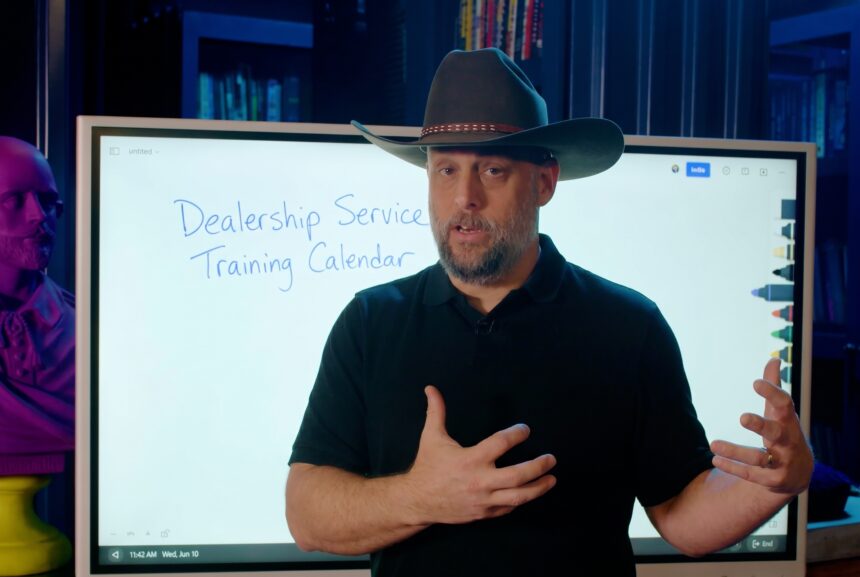
Direct Answer
A dealership service training calendar should include follow-up activities that help employees retain and apply what they learn. A workshop introduces a skill, but reminders, practice, manager observation, and later assessments help turn that information into consistent workplace behavior.
One practical approach is spaced reinforcement. Revisit important skills after seven days, thirty days, and one quarter, using short exercises and real work observations to check whether employees still understand the process.

Key Takeaways
- Training needs reinforcement beyond the original session.
- Follow-up should include practice and demonstration.
- Seven-day, thirty-day, and quarterly checkpoints provide a useful review structure.
- Managers and mentors should verify real-world application.
- Job aids and huddle reminders help employees remember procedures.
- Training records should show whether skills are retained and applied.
Why Training Needs Follow-Up
Prevent Skills From Being Forgotten
Employees may understand a procedure during a workshop but struggle to recall it weeks later. Regular reinforcement gives them additional opportunities to revisit important information.
Connect Learning With Daily Work
Short practice assignments and manager observations help employees apply lessons during actual customer interactions, inspections, and repairs.
Identify Skills That Need More Attention
Follow-up assessments reveal whether employees have mastered a process or need additional instruction.
Build a Reinforcement Schedule
First Checkpoint: Seven Days
Use a short huddle question, knowledge check, or practical exercise to revisit the lesson. Ask employees to explain the process or demonstrate an important step.
Second Checkpoint: Thirty Days
Observe employees performing the task during normal operations. Review a customer interaction, repair-order sample, inspection, or technical demonstration as appropriate.
Third Checkpoint: One Quarter
Conduct a more complete review to determine whether the skill has become part of regular work. Identify employees who need additional coaching and update the training record.
Reinforce Different Skills in Different Ways
Technical Procedures
Ask technicians to demonstrate diagnostic steps, inspection standards, or safety procedures. A mentor can verify that the work meets the required standard.
Advisor Communication
Observe greetings, walk-arounds, estimate presentations, status updates, and customer follow-up. Use recorded calls or customer feedback when available.
Systems and Compliance
Review DMS entries, warranty documentation, authorization records, and required safety procedures. Use actual work samples to identify recurring errors.
Give Managers a Clear Follow-Up Process
After each workshop, identify the behavior employees should demonstrate, prepare a simple job aid, and assign a manager or mentor to observe progress.
Document the original session, follow-up dates, assessment results, and any additional coaching. This makes it easier to identify which lessons have been retained and which need another round of practice.
Protect Time for Reinforcement
Reinforcement does not always require another full training session. Short huddle discussions, supervised practice, and scheduled observations can fit into normal department operations.
For longer technical exercises, use rotating groups, protected bay space, and paid training time for flat-rate employees. These arrangements help maintain customer coverage while employees continue developing their skills.
Ready to Fill Your Calendar With Proven Fixed Ops Training?
A busy schedule only pays off with the right guidance. Don’t worry! Service Drive Revolution Live Academy gives you a clear blueprint for running your department like a profitable business. You’ll get two live fixed ops training sessions every month with Chris Collins and the CCI coaching team. Together, we tackle real problems, from loading the shop and managing pay plans to fixing culture and driving traffic.
Bring your biggest headaches straight to the live Q&A. You’ll get direct feedback from our coaches and connect with a community of service pros who actually know the job. Plus, your entire team gets unlimited access to 700+ on-demand videos covering everything from advisor skills to hiring technicians. Missed a call? Every session is saved in the vault so you can catch up whenever you have time.
Stop guessing and start winning. Try SDR Live Academy for 30 days! We will help you read the numbers, fix broken processes, and become the leader your store needs.
Book your spot and start transforming your department today at Service Drive Revolution Live Academy.
Frequently Asked Questions
Why should dealerships reinforce employee training?
Follow-up helps employees remember procedures, apply new skills consistently, and identify areas where additional coaching is needed.
How often should training be reinforced?
Seven-day, thirty-day, and quarterly checkpoints provide a useful starting schedule. The timing can be adjusted based on the complexity and importance of each skill.
What is the best way to check whether employees remember training?
Use knowledge questions, practical demonstrations, manager observations, and reviews of actual work.
Who should be responsible for reinforcing training?
Service managers, department supervisors, and qualified mentors can share responsibility for observing performance and providing feedback.
How can managers reinforce dealership service training calendar without disrupting operations?
Use short huddle activities, brief observations, rotating groups, and planned technical practice instead of relying entirely on lengthy classroom sessions.
Bottom Line
A dealership service training calendar should not end when a workshop finishes. Scheduled reminders, practical assignments, manager observations, and quarterly assessments help employees retain what they learn and apply it consistently. This follow-through makes training more useful to both employees and the dealership.
We hope you found these insights useful! If so, we’d really appreciate it if you could share this article with your industry colleagues. Don’t forget to follow us so you won’t miss the latest uploads!
Related reading on techvail.com: A guide to fixed-ops training; Systems behind a prepared service drive.